
Alla inlägg, Blänkare, English, Fisketeknik vid kusten, Flugor, Intermidia, Mina flugor, Nibor One Sting, Okategoriserade, Sandbotten, Sight fishing, Sommarfiske, Testflugor, Uncategorized, Video, Youtube
Nibor One Sting in English
mar
Svenska introduktion
Nibor One Sting – Ett nytt koncept inom kustflugfiske
Den här artikeln berättar historien om hur Nibor One Sting utvecklades under flera års kustfiske efter havsöring längs den skånska kusten.
Artikeln är skriven på engelska så att även internationella flugfiskare kan ta del av konceptet.
Taggar:
#Havsöring #Kustflugfiske #Flugfiske #Skåne #Tobis #Havsöringsfiske
Deutsche Einführung
Nibor One Sting – Ein neues Konzept im Meerforellen-Fliegenfischen
Dieser Artikel beschreibt die Entwicklung der Nibor One Sting Fliege, entstanden durch jahrelange Beobachtung von Meerforellen an der südschwedischen Küste.
Der Artikel ist auf Englisch geschrieben, damit auch internationale Fliegenfischer das Konzept verstehen können.
Tags:
#Meerforelle #Fliegenfischen #Küstenfischen #Ostsee #Meerforellenfliege
Launch Introduction
A fly that behaves like a lure — yet casts like a fly.
The Nibor One Sting concept was developed after years of observing sea trout hunting baitfish in shallow water along the Swedish south coast.
What started as curiosity slowly turned into a new way of presenting baitfish with a fly rod.
Today the concept is released in small handcrafted batches for curious fly anglers and early adopters who enjoy exploring new ideas in coastal fly fishing.
Nibor One Sting – Quick Facts
• handcrafted fly lure concept
• hollow baitfish body design
• small batch production
• designed for shallow water sea trout fishing
• often triggers strikes during the pause after the cast
Where the Idea Began
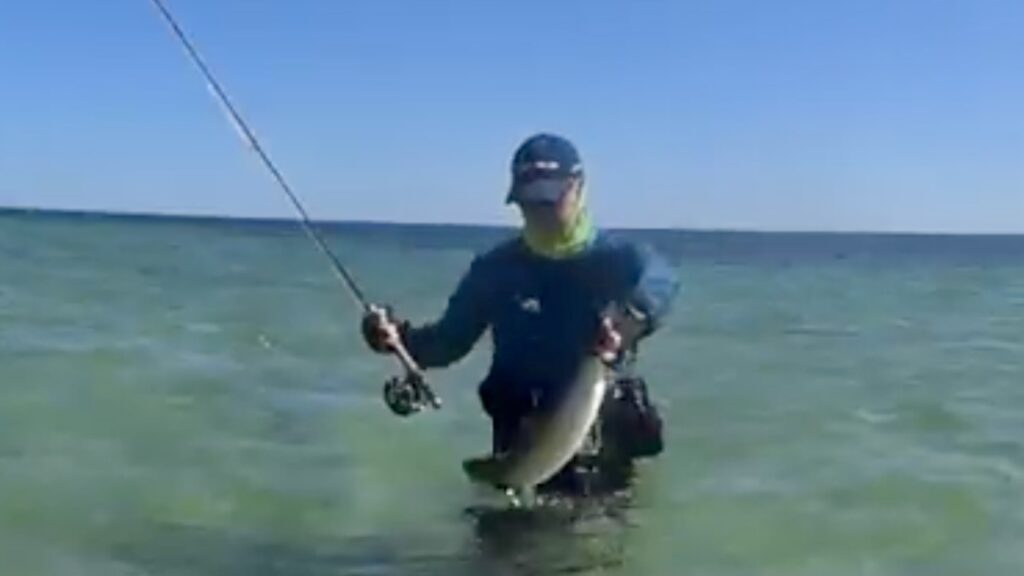
One summer day while fly fishing along the Swedish south coast, I found myself standing in shallow water surrounded by sea trout chasing king tobis right around my legs.
The water was alive with movement.
Small baitfish darted across the sand, flashing silver when they turned in the sunlight. Sea trout attacked them aggressively.
But there was one problem.
They completely ignored my fly.
I tried different patterns, retrieves and techniques. Nothing changed their behaviour.
Instead of casting again, I stopped and simply watched.
The tobis were slim, compact and often moved slowly through the water. When they changed direction their sides flashed briefly in the sun.
That moment planted a simple thought:
Perhaps sea trout were reacting more to shape, reflection and movement than to traditional fly materials.
The First Experiments
Back home I began experimenting.
The first prototypes were crude and built simply to test the idea. Many failed.
Some broke after only a few fish. Others were too heavy to cast properly with a fly rod. Some simply behaved incorrectly in the water.
But occasionally one worked.
And when it did, sea trout reacted differently than they did to traditional flies.
That was enough to continue.
Over time the concept evolved through trial and error in real fishing situations. Balance, hook placement, body shape and sink behaviour were refined over several seasons.
Anyone attempting to copy the idea would quickly discover the same thing: early versions rarely work perfectly. Many stages of development are required before a fly behaves correctly in both air and water.
Four Years of Development
During the following years the concept slowly evolved into what is now known as Nibor One Sting.
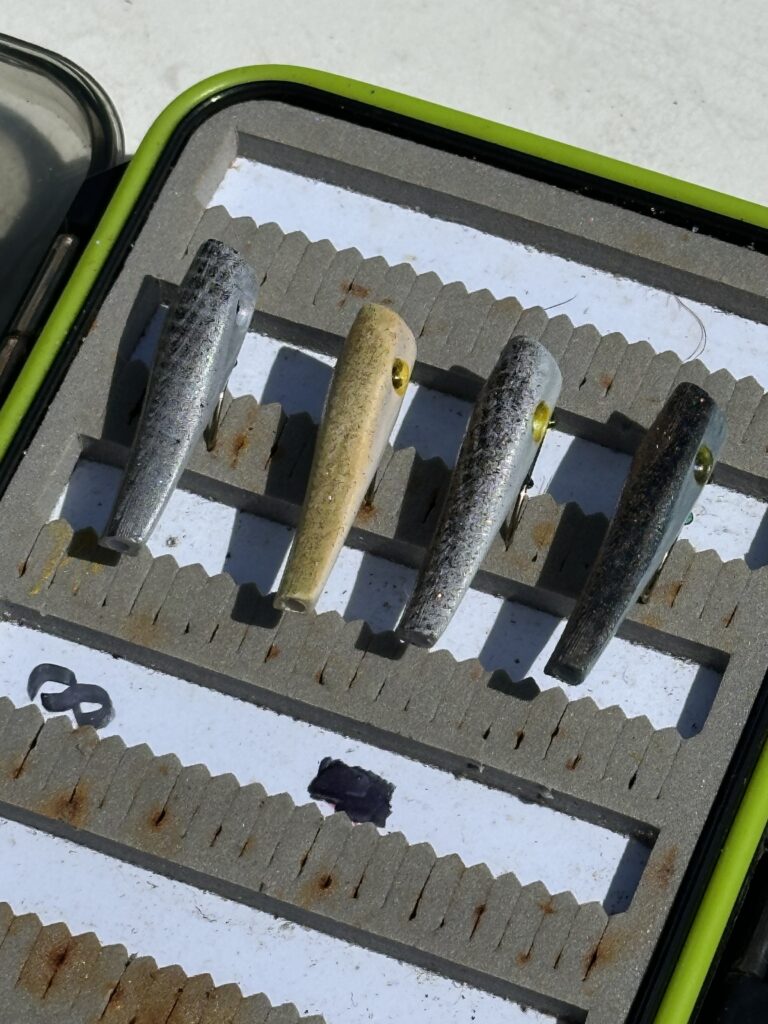
The fly uses a hollow body design that fills with water when it lands. This allows the fly to maintain a compact baitfish shape while remaining extremely light.
The hook itself plays an important role. Positioned forward, it stabilizes the fly and ensures it swims correctly in the water.
Because of this balance the fly travels cleanly through the air and does not spin during casting.
Despite its compact baitfish shape the fly can still be cast surprisingly far with a normal fly rod.
The Best of Two Worlds
Traditional flies rely on soft materials because they must remain light enough to cast.
But this also limits how compact and defined a baitfish shape can be.
The Nibor concept approaches the problem differently.
It allows a structured baitfish profile that visually resembles a small lure, yet behaves like a fly during casting and presentation.
In many ways the concept combines:
the subtle presentation of a fly
and the visual attraction of a lure.
The Importance of the Pause
One of the most important discoveries came during actual fishing.
Many sea trout strike immediately after the cast.
After the fly lands and the line is mended once, the Nibor begins a slow descent through the water.
As it sinks the body tilts gently from side to side, creating flashes that resemble reflections from real baitfish scales.
Very often the strike happens during this moment — before the first retrieve even begins.
The Sound of a Landing Fly
Another possible trigger occurs the moment the fly touches the water.
Small baitfish such as sticklebacks and tobis often jump from the water when escaping predators. When they land again they create a small disturbance on the surface.
Sea trout are extremely sensitive to these signals.
The sound and ripple created when the Nibor lands may resemble the moment when a small baitfish falls back into the water after a panic jump.
This may explain why many strikes occur within seconds after the cast.
Observing the Attack
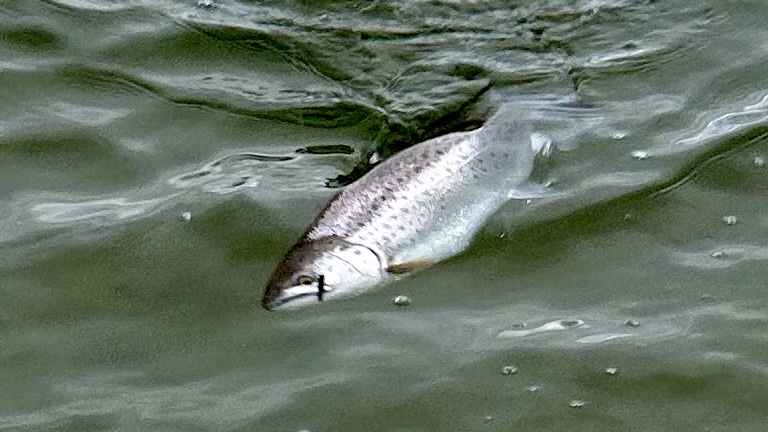
In clear shallow water it is sometimes possible to observe the final moment of a sea trout attack.
The fish often accelerates rapidly from an ambush position among darker patches of bottom.
Only at the very last moment does it appear to open its mouth and take the fly.
Immediately afterwards the trout turns sharply, a typical predator movement after capturing prey.
Multiple Attacks
Another interesting behaviour observed while fishing the Nibor One Sting is that sea trout sometimes attack the fly several times.
If the first strike misses, the trout may circle back and attack again — occasionally two or even three times before the fish is finally hooked.
This behaviour is rarely seen with traditional flies and suggests that the fish perceives the Nibor as a real baitfish rather than a typical fly imitation.
Fishing the Shallow Zone
Most testing has taken place in shallow coastal water.
These environments often consist of what anglers call leopard bottom — a mixture of sand, stones, eelgrass and darker patches of kelp.
Sea trout frequently position themselves along the edges where darker bottom meets lighter sand.
From these ambush positions they watch for prey moving across the open sand.
Allowing the Nibor to pause just before crossing this boundary often triggers the strike.
When Garfish Are Present
Many fly anglers stop targeting sea trout when garfish arrive in large numbers during spring.
However, the presence of garfish can sometimes indicate that baitfish are concentrated in the area.
During testing of the Nibor concept it became clear that sea trout often appear in the same situations.
By fishing the fly very slowly and keeping the hook positioned forward, it is possible to experience many garfish strikes without actually hooking them.
In some situations the disturbance created by garfish may even trigger more aggressive behaviour from nearby sea trout.
Increased Visibility with Metallic Finishes
Recent testing with metallic silver and gold versions of the Nibor One Sting has produced particularly interesting observations.
Sea trout appear to notice the fly from greater distances compared to earlier versions.
The reflective metallic surface creates flashes similar to real baitfish scales when the fly tilts during its slow descent.
Even in cold water conditions around 4°C, sea trout have been observed reacting aggressively shortly after the fly lands.
Documented on Film
Many of these behaviours have been captured on film during actual fishing.
The footage shows:
• the cast and landing of the fly
• sea trout approaching from distance
• strikes immediately after the pause
• multiple attack attempts
• successful hook-ups and release of the fish
These recordings have helped confirm many of the observations made while developing the Nibor concept in shallow water.
Profiles and Colors
The Nibor One Sting is produced in several baitfish profiles.
• Small – subtle baitfish profile
• Medium – balanced all-round profile
• Tobis – longer sand eel inspired profile
Color selections are based on many years of coastal fly fishing experience.
Classic colors such as white, baitfish tones and tobis patterns remain effective.
More recently metallic silver and gold finishes have shown particularly promising results.
The Origin of the Name
The name Nibor has a simple origin.
It is the name Robin, spelled backwards — the name of my oldest son.
Small Batch Production
Nibor One Sting flies are handcrafted.
Because of the time required to produce each fly, production remains limited.
Rather than mass production, the flies are released in small handcrafted batches.
Nibor Metallic Batch #1
The first release of the concept is known as:
Nibor One Sting – Metallic Batch #1
This batch introduces the metallic silver and gold versions that have shown particularly strong reactions from sea trout.
It represents the first production series available to the fly fishing community.
Packaging
Each package contains:
• 4 handcrafted Nibor One Sting flies
• selected profiles and colors depending on availability
• flies individually inspected before delivery
Environmental Consideration
The body material used in the Nibor One Sting is starch-based and biodegradable, chosen to reduce environmental impact while maintaining durability for fishing.
Design Protection
The Nibor One Sting concept represents several years of personal development and original design work.
The visual design, structure and concept are protected under European Union intellectual property and design regulations.
The design may not be copied, reproduced, manufactured or commercially distributed without the explicit written permission of the creator.
A Concept Still Evolving
The Nibor One Sting was never intended to replace traditional flies.
Instead it represents another way of approaching the same challenge every fly angler faces — presenting something convincing enough to trigger the instinct of a hunting fish.
But the idea itself began in the simplest possible way:
standing quietly in shallow water, watching sea trout chase baitfish — and wondering why they ignored the fly.

Tight Lines
Christopher Bell Blomquist
Coastal Fly Fisher – Skåne, Sweden
FlyFish4Fun
Tags:
#NiborOneSting #SeaTrout #Meerforelle #Havsöring #CoastalFlyFishing #FlyFishingInnovation
